Pica: Chewing Plastic, Licking Walls, and Eating String
Separate nutritional, medical, and behavioral causes of pica while prioritizing lethal string hazards.
Step-by-step checklist
- 01 Rule out anemia and disease
- 02 Lock up strings and plastics
- 03 Never pull exposed strings
- 04 Offer chewing substitutes
- 05 Log episodes and triggers
- 06 Behavior clinic for compulsion
Overview
Read the full profile
Pica is persistent chewing or swallowing of non-food: plastic, fabric, litter, wall paint, and string. Rule out medicine first: anemia, GI disease, and deficiencies can trigger it, and kitten exploration differs from adult compulsive ingestion; cats with confirmed swallowing need bloodwork and imaging.
Protection comes first: lock away string, hair ties, plastic bags, and wool, because linear foreign bodies pleat and perforate the bowel as lethal emergencies; a string visible at mouth or anus is never pulled, just an ER trip. Wall licking needs paint-risk assessment and physical blocking of the area.
Behaviorally, add foraging enrichment and chewing substitutes like cat grass or vet-approved edible chews, stabilize routines against anxiety, and log episodes to find triggers. Oriental breeds carry higher genetic tendency. Persistent compulsive pica goes to a behavior clinic for combined medication and environmental plans; punishment does nothing.
Related products
A replaceable corrugated scratcher for horizontal scratching that redirects claws away from sofas.
KONG Catnip KickerA catnip-filled kicker for cats that grab, bite and bunny-kick, suitable for solo play.
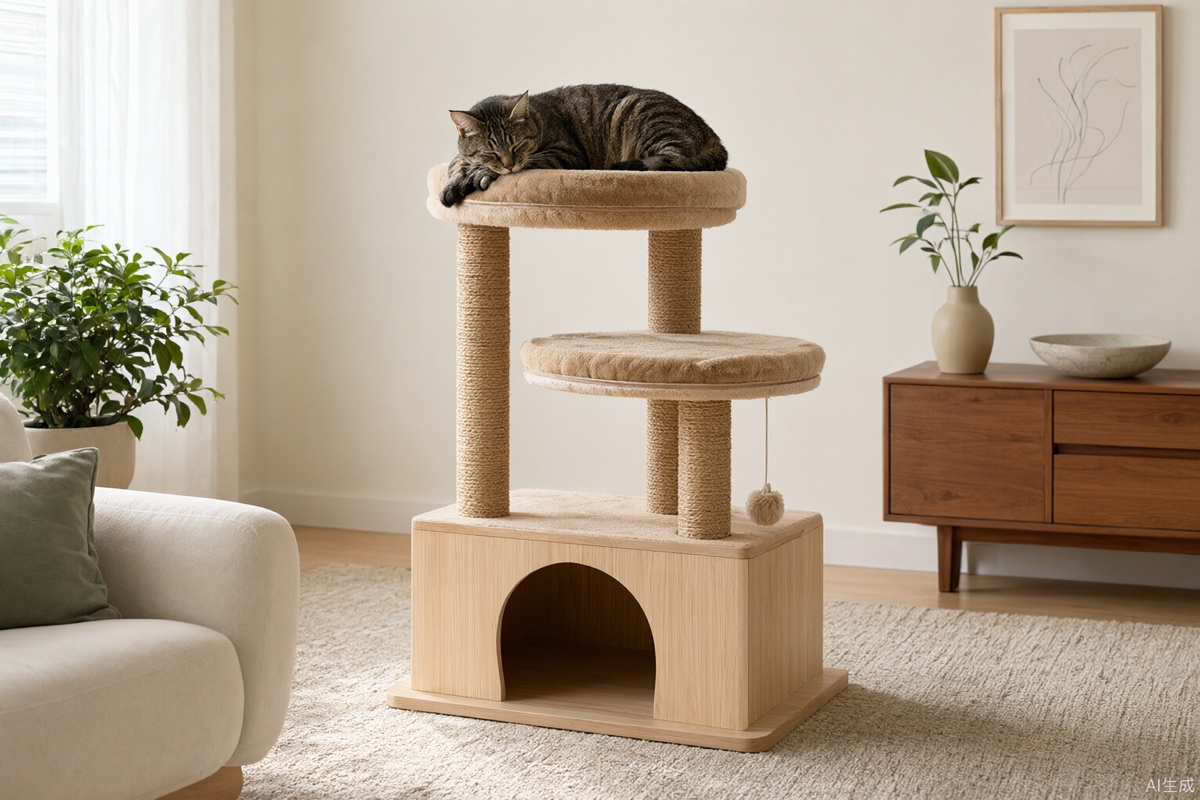
Jingzao Cat TreeA multi-level tree with perches, a cubby and sisal posts for homes that want vertical space on a budget.
Owner questions
My cat eats litter. Should I change litter?
Yes. Switch to a type that is hard to ingest and secure cords and plastic bags. Also see a vet to rule out anemia, GI disease, and nutritional gaps.